
Custom Battery Systems Engineered for Power Tools
YC Batteries develops custom lithium battery systems for high-power cordless tools around the operating profile, peak loads, package space, charging approach, environment, interfaces, and production goals.
Request an Engineering Review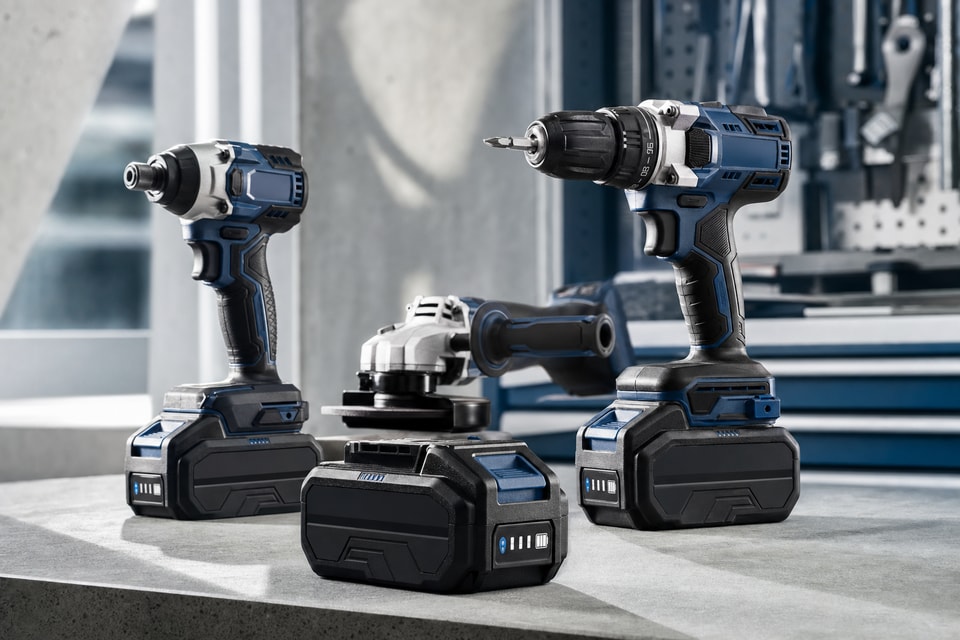
Engineering the battery as part of the tool system
Startup peaks, sustained loads, heat, impacts, contamination, handling, charging workflow, and tool interfaces must be reviewed together.
What the design must resolve
Mission and Load Definition
Define standby, normal demand, transient events, runtime goals, and charging opportunities.
Protection and Control
Coordinate protection, sensing, balancing, state reporting, and charger behavior.
Mechanical and Environmental Fit
Develop enclosure, supports, insulation, contacts, and thermal paths around heat, contamination, and impacts.
Manufacturing Readiness
Translate the reviewed design into controlled materials, drawings, assembly, inspections, and checks.
Four connected design layers
Cell and Energy Layer
Candidate cells and arrangements are evaluated against load, space, weight, charging, environment, and lifecycle goals.
Protection and Intelligence Layer
Protection, sensing, balancing, current control, and state estimation are developed with tool and charger expectations.
Mechanical and Thermal Layer
Cell retention, interconnect support, insulation, enclosure, contacts, and heat paths form one architecture.
Interface and Production Layer
Contacts, charging, labels, assembly methods, inspection points, and checks are defined together.
Where this approach fits
Drills and drivers
Cutting tools
Fastening equipment
Workshop tools
Engineering directions, not completed customer cases
Drill and Driver Integration
Electrical, protection, enclosure, thermal, contact, charging, and verification parameters remain project-specific.
Cutting Tool Platform Direction
This is a design direction for discussion, not a claimed delivered project.
From use case to repeat production
Define Use Case
Develop Architecture
Review and Refine
Plan Production
Common project questions
What information should we provide?
Share the tool, load profile, runtime objective, battery space, environment, charging, interfaces, heat, impacts, markets, and forecast.
Can the enclosure and interfaces be customized?
Yes. Final choices depend on electrical demand, environment, assembly, and service requirements.
How is an architecture selected?
Candidate approaches are compared against the complete use case.
How are prototypes approached?
Samples may support agreed fit, charging, functional, thermal, mechanical, or environmental review.
Discuss Your Power Tool Battery Project
Share your load profile, space, environment, charging approach, interfaces, markets, and forecast.

Jiangsu Yongchang New Energy Technology Co., Ltd. and Shanghai YC Electrotech Co., Ltd. deliver certified lithium battery solutions backed by 15 years of experience, a 30,000 m² manufacturing base and exports to 100+ countries and regions.
CERTIFICATIONS
- CE & CCC
- IEC 62133 & GB/T 28164
- UN38.3 & MSDS
- RoHS, CB & REACH
CONTACT US
- Gaoqiao, Houxian, Danbei Town, Danyang City, Jiangsu Province 212300, China
- Tel: +86 511 8639 1768
+86 189 5282 5827
+86 189 1283 8663 - Email: contact@yc-batteries.com
- Web: www.yc-batteries.com


